
Searching the Biscoe Court Docket
Pull out the citation or court notice before anything else. It carries the case or citation number, the court name, the department, and the party name. The appearance date is there too. An exact number cuts straight through the Biscoe and Fredonia naming tangle. Then run the number through Search ARCourts, the public statewide case system. Check Prairie County, the court, the caption, and the filing date. Also check the status and the newest event before trusting any result. The city keeps no portal of its own. An older official court plan calls the session place Bisco. Census mapping labels it Fredonia (Biscoe). Expect all three labels in the wild.
- Read the court name printed on the Biscoe citation or notice.
- Search the exact case number before trying a participant name.
- Check Biscoe, Fredonia, and Bisco only as supporting place clues.
- Review later events for a reset, transfer, disposition, or Circuit appeal.
- Ask the identified clerk to confirm the current setting and copy process.
Biscoe Docket Name Mismatch
Three official labels describe one small community. The Census map says Fredonia (Biscoe). The district administrative plan lists Bisco as a court location. Locals just say Biscoe. A portal search built around a single city label can therefore miss a record that the schedule or the filing describes with an older name. Guessing a court from the city name is the wrong move. Search by case number and court. With only a name, use the participant fields, then read the county and court details on the result. When asking the District Court clerk to trace an older Biscoe matter, mention all three labels. Do not treat the labels as separate identities. They describe place context, while the participant name and court case number identify the case. A Biscoe resident's docket entry may show only the assigned department. Quoting an old notice's exact label helps staff find the right file. Bisco connects to the historical court plan. Fredonia explains Census geography. Neither proves a current session carries that name.
| Label | Official context | Search use |
|---|---|---|
| Biscoe | Common city name | Use as the first place description. |
| Fredonia (Biscoe) | Official Census map label | Use when comparing incorporated-place material. |
| Bisco | Older District Court plan | Mention when tracing a historical session reference. |
Biscoe Municipal Court Basics
Biscoe has no independent municipal court. There is no city judge or clerk. There is no municipal portal of its own. The documented court context is Prairie County District Court, whose older administrative plan lists a Bisco session for criminal and traffic matters. Because a historical plan does not establish a present schedule, confirm the current status and location with staff. That absence actually helps. It steers a Biscoe searcher away from a local database that does not exist and toward the citation, Search ARCourts, and Prairie County District Court staff. Felonies and major civil matters belong to Prairie County Circuit Court, not to any Biscoe lower-court docket.
Fredonia Biscoe Census Docket Context
The official Census incorporated-place material shows why Biscoe searches keep running into Fredonia. It explains the naming context only. A court may or may not use that label today.
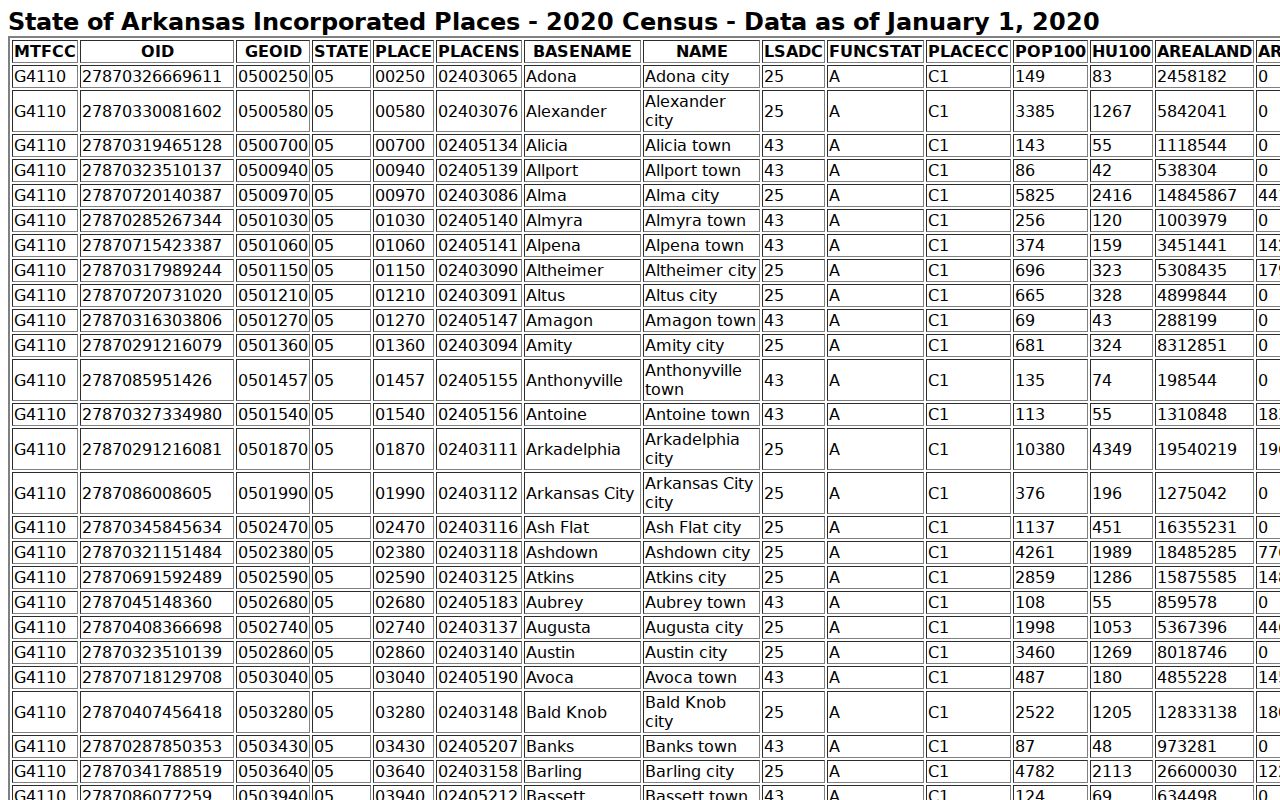
The Census entry ties Biscoe's official place identity to a practical rule: verify the actual court and department on each record. A Census label is geography, not docket custody. It is not evidence of a separate court. The citation and the court record remain the sources for jurisdiction.
Court Dates and Settings in Biscoe
The older district plan set a fourth-Thursday Bisco session. Useful history, but it is not a Biscoe appearance notice. Reconfirm the plan's date, location, and time with the current court before anyone travels. The court publishes no verified daily Biscoe calendar. Compare the newest written notice against the latest case-history event. Then call the court named on the notice. A reset changes a setting; it does not dismiss the case.
| Date | The current date after any reset, not a historic fourth-Thursday assumption. |
|---|---|
| Time | The time stated by the live court record or fresh notice. |
| Department | The Prairie County District Court department currently assigned. |
| Judge | The presiding judge confirmed through current court information. |
| Setting Type | Arraignment, pretrial, bench trial, or another event shown on the record. |
Biscoe Fourth-Thursday Docket History
The fourth-Thursday reference in the administrative plan shows Biscoe once had a recurring lower-court session. It shows no 2026 date. There is no current courtroom or judge. Plans get amended. Departments get consolidated, and settings move case by case. Use the historical label only to help staff identify the docket in question. Give the citation number. Ask whether a Biscoe or Bisco session exists now. Also ask where it meets and when the case is set. An old schedule never proves a required appearance. Read a live Biscoe notice for five facts: date, time, department, judge, and setting type. A later entry saying reset, continued, or canceled overrides the old fourth-Thursday reference every time. Confirm directly whenever the history shows several schedule events. The plan documents criminal and traffic work at Bisco, not a full municipal docket. Route small claims and other civil matters by the current case record. Do not stretch the plan beyond the case types it names.
Historical schedule: The fourth-Thursday reference helps identify the old Bisco docket, but the current court must supply the live setting.
Traffic Tickets in Biscoe
Start with the court named on your Biscoe citation. That name controls the rest of the search. An older plan tied the Bisco location to criminal and traffic work, but confirm the current assignment before relying on it. Search ARCourts may list case information for a participating court. The clerk still controls the live setting.
Biscoe publishes no online payment portal or fee schedule, and no deferred-disposition rule, driving-course option, or photo-enforcement program. Ask the clerk about local payment steps instead. Paying a ticket is one plea choice. Contesting it is another. So ask whether payment resolves the matter, whether appearance is required, and what deadline controls. Use the Prairie County traffic ticket search for the full county channel chain.
Appearance date: If it has passed, contact the court shown on the Biscoe citation rather than using an unofficial payment link.
Biscoe Citation Court Check
The city name alone won't do. A Biscoe ticket can show the current District Court department, the citation number, the charge, and the appearance date, and those fields beat any guess based on where the stop happened. Before you call, have these ready:
- The citation or case number exactly as printed.
- The full name on the Biscoe citation.
- The court and department shown on its face.
- The appearance date and stated charge.
- Any later notice that changed the setting.
Ask three things at once. Does Search ARCourts carry the case, is payment permitted, and how do you get a certified disposition? Don't assume a date of birth is required. No Prairie source states that rule. If the court line on the ticket has no clear department label, describe the stop location and all of its wording to Prairie County District Court staff. The clerk routes that better than any guess. A guess built on Fredonia, Biscoe, or Bisco can land your question in the wrong office. Write down the official department and number they give you for future checks.
Where Biscoe Cases Go
Where a Biscoe case starts depends on its type. Criminal and traffic matters can begin in the Prairie County lower-court system. That applies within District Court jurisdiction. A felony, general civil suit, domestic matter, probate case, or juvenile matter belongs in Circuit Court instead. Ask staff to confirm the correct northern or southern Circuit district.
Docket flow: Prairie County District Court › Prairie County Circuit Court › Arkansas Court of Appeals and Arkansas Supreme Court
A District Court appeal usually opens its own Circuit case number and history. The old number does not follow it. Use the Prairie County case lookup to trace that cross-reference, and record both numbers whenever they appear. Transfers work the same way. Search the newer Circuit history separately. Ask its clerk for any certified Circuit filing, and treat the process line as routing information rather than proof that every Biscoe case is appealed.
Biscoe Certified Docket Custodian
The court holding the Biscoe case is the one that certifies the record. Search ARCourts can show a docket or case history. A public event line is not the filed order. It is not a certified copy either. Before you contact the custodian, write down the case number, event title, filing date, court, and department.
A District Court ticket? Take it to the current District Court clerk. Circuit matters go to the Prairie County Circuit Clerk office assigned to the file. Ask for current plain-copy and certification charges, payment methods, and delivery steps. Biscoe publishes no local request form or copy fee of its own.
Request one judgment, not every page. A broad request for the whole file takes more work than a request for a single judgment or disposition. Use the case history to pinpoint the exact Biscoe event first. Need a transcript? Ask the trial court for court-reporter information, because no transcript comes from expanding a docket line. Exhibits and sealed parts may require added permission.
Historic Biscoe material may not be fully digitized. Ask whether the file is paper, bound, microfilmed, or stored elsewhere, and whether advance retrieval is needed. Once the clerk locates the actual file, that office can quote current inspection and copy terms.
Biscoe Court Record Access Rules
Arkansas court records are open, with legal exclusions. A Biscoe search can omit sealed cases, juvenile material, protected family content, personal identifiers, and anything made confidential by law or order. Online access can also be narrower than inspection through the custodian. Confirm the case number and court first. Then ask staff why a result is absent. Staff can explain whether a public request channel exists without disclosing protected material, and a certified record still comes only from the clerk that maintains the original file.
Key rules:
Arkansas Supreme Court Administrative Order 19 governs court-record access and excludes confidential information from ordinary public view.
Arkansas Code § 25-19-105 addresses examination and copying under Arkansas FOIA, while judicial rules particularly govern case files.
Missing Biscoe Docket Results
No result does not mean no case. Check the case number, the participant spelling, and the court level. Try the Fredonia and Bisco labels too. If a needed search feature remains there, try the legacy Public CourtConnect. Then call the court named on your source document.
The case may sit under another department, predate online coverage, or be restricted. An honest gap beats an invented Biscoe portal. Direct court confirmation is the authoritative fallback.
The portal technology is also changing. Search ARCourts began replacing Public CourtConnect in 2024, legacy functions stayed available during migration, and Arkansas continues work on its case-management environment. Search labels and functions may change, but you still verify the court, the case number, and the custodian.
If the public portal is down, don't read a failed search as a dismissal. Use the court information on the Biscoe citation or notice and ask staff to confirm the live status.