
Searching Prairie County Civil Dockets
Your first stop is Search ARCourts, the Arkansas Judiciary Case Search. Pick the court level before you type a name. General civil, domestic-relations, and probate matters belong to Circuit Court. Limited civil and small claims belong to Prairie County District Court, so choose the right Circuit district or District department after that.
An exact case number cuts down on same-name mix-ups. With a name search, check the caption, party roles, filing date, court, and status before trusting the match. Search ARCourts is an index, not a certified file. When a case or image is missing, try legacy CourtConnect, call the right clerk, ask about counter inspection, or request mailing and copy instructions.
- Classify the matter as Circuit Court civil or District Court limited civil or small claims.
- Identify the northern or southern Prairie County district when the case is in Circuit Court.
- Search the case number, party name, organization, or case description.
- Verify the caption, filing date, status, and party roles before opening the history.
- Read service, motions, orders, settings, and disposition in date order.
- Order the actual judgment from the record custodian when its terms matter.
Prairie County Civil Party Roles
You may see different role pairs on a Prairie County civil docket. Plaintiff and defendant are the usual pair. They appear in ordinary claims. Petition-based matters use petitioner and respondent. Many domestic and probate cases fall in that group. An intervenor is someone a judge has allowed to join an existing action.
- Plaintiff
- The party who brings an ordinary civil claim.
- Defendant
- The party who responds to that claim.
- Petitioner
- The party asking the court for relief by petition.
- Respondent
- The party responding to a petition.
- Intervenor
- A party added to an existing dispute with court permission.
Party roles help you tell apart two similar Prairie County captions. They also reveal who filed a motion or received an order.
Inside a Prairie County Civil Docket
The docket, or case history, traces a civil matter from start to finish. A typical Prairie County entry set opens with the case number, court, caption, case type, filing date, and status. Later lines can show service, pleadings, motions, orders, settings, judgment, post-judgment activity, appeal, and public document links.
| Case number | The exact court-assigned key; Prairie County’s local number mask was not published. |
|---|---|
| Caption and roles | The named parties and whether each is plaintiff, defendant, petitioner, respondent, or another role. |
| Service event | The record of summons, citation, return, or other process activity. |
| Pleading or motion | A filed request or statement, which must be paired with any later ruling. |
| Setting | The hearing or trial event, date, and available court details. |
| Judgment or disposition | The recorded result and date, with financial fields when public and entered. |
| Post-judgment event | A writ, garnishment, abstract, appeal, or other later activity in the same matter. |
A free event line is not the actual complaint, order, or judgment. When exact wording matters, request the filed document itself.
Most Prairie County civil cases run the same path. It starts with a complaint or petition, then summons and service, answer, motions, and discovery notices. A hearing or trial follows. Judgment or dismissal closes it out. Writs, garnishments, abstracts, or an appeal may follow. If a short event label leaves doubt, the actual order controls.
Prairie County Civil Motions and Orders
A motion asks the court to act. It does not prove the judge granted it. So on a Prairie County civil docket, read forward from each motion and look for an order, hearing, minute entry, or other disposition tied to that request.
Key distinction: “Motion filed” records a request. “Order entered” records a judicial ruling. The two may appear days or months apart.
Service deserves the same care. A complaint filing date does not by itself show that the other side received process. Check the later service event before concluding anything about participation or response time.
Discovery notices may also appear between pleadings and a hearing. They document procedural activity, but the docket line may not expose the underlying material. When a filing matters, save its title and date. Then ask the proper Prairie County clerk whether a public copy exists.
Civil Case Types on the Docket
Prairie County Circuit Court keeps general civil matters along with domestic-relations and probate case records. District Court handles civil and small claims within limited jurisdiction. No current dollar threshold applies here as a reliable guide, so do not rely on a stale amount when choosing the court. Ask the clerk instead.
| Matter | Likely Prairie court | Docket clues |
|---|---|---|
| General civil claim | Circuit Court | Complaint, service, answer, motions, judgment |
| Domestic relations | Circuit Court | Petition, response, settings, protected content where applicable |
| Probate | Circuit Court | Petition, notices, orders, estate events |
| Limited civil | District Court | Department-specific civil case history |
| Small claims | District Court | Claim, service, hearing, disposition |
Ask the District Court clerk about a small-claims file. Do not assume the Prairie County Circuit Clerk holds every civil matter.
Prairie County Civil File Districts
Prairie County has northern and southern Circuit Court districts. A case found statewide may still sit as a paper file at only one counter. The northern Circuit Clerk service point is 200 Courthouse Square, Suite 104, Des Arc. Its telephone is 870-256-4434. The southern clerk line is 870-998-2314.
Published addresses for the DeValls Bluff courthouse complex differ. They list both 123 Magnolia Street and 183 Prairie Street. Give the clerk the case number. Confirm the mailing address before sending any document request. Ask as well whether the record is on site and whether inspection is offered. Also ask what copy, certification, payment, and turnaround terms apply. The county publishes no civil copy form, fee list, public terminal policy, or fixed counter hours. Those details come from the clerk's office.
Historic Prairie County civil files may live as paper, bound docket books, microfilm, or off-site storage. Silence online does not mean the file never existed. Call first and have the clerk check the correct district and storage status.
Civil Docket Settings and Hearings
A Prairie County civil setting can take many forms. It may be a hearing, trial, motion hearing, status conference, or another court event. Check every later entry for a reset, continuance, cancellation, or scheduling order. The Circuit Clerk records filed settings. The judge and court staff control the live schedule from the bench.
Compare the newest case-history event with the written notice or order that set it. When the date truly matters, call the specific court. Prairie County offers no standalone daily civil calendar portal. Treat an old listing or an earlier event as provisional. The full channel sequence is set out in the Prairie County Court Dates resource.
Note: A Prairie County filing date marks record activity. It is not automatically the date when a hearing will occur.
Prairie County Civil Dispositions Compared
On a short result list, several civil endings can look nearly the same. A dismissal, a default judgment, and a voluntary settlement row may read alike. Each means something different in Prairie County court records. Pull the actual order tied to the disposition before you treat the outcome as final. Life after judgment continues under the same case number. Post-judgment filings land in the existing Prairie County case, not a fresh one.
| Entry | Plain meaning | Next record to inspect |
|---|---|---|
| Default judgment | A judgment entered after a failure to respond or appear, subject to court rules | The signed judgment |
| Nonsuit | A plaintiff’s voluntary termination, subject to procedure | The notice and dismissal order |
| DWOP | Dismissal for want of prosecution | The dismissal order |
| Agreed judgment | A judgment reflecting an agreement accepted by the court | The entered judgment |
| Trial judgment | A judgment following adjudication | The final judgment and later appeal entries |
Expect to see writs, garnishments, abstracts, and appeals show up after judgment. Those entries mark enforcement or review steps. They do not signal a new lawsuit on the civil docket.
Civil Docket Access Rules
Arkansas confidentiality rules shape what Prairie County civil case information you can see. Online access has limits. What you reach there is not the same as what you could view at the courthouse. An event can sit in the public docket. Its linked image may be missing, redacted, or restricted. Domestic, probate, juvenile, adoption, and similar protected content often gets narrower treatment still.
Arkansas access rules:
Arkansas Supreme Court Administrative Order 19 governs access to court records and excludes confidential data.
Administrative Order 19.1 information addresses redaction and sealed unredacted versions of covered court administrative records.
Arkansas FOIA, Ark. Code §25-19-105 covers examination and copying, while court records remain specifically governed by judicial rules.
The clerk can walk you through inspection and copy steps. That help has limits. The clerk cannot hand out protected material. The clerk cannot offer legal advice. Parties or authorized people may need identification, counsel, or a court order to reach restricted documents. A missing image proves nothing about whether a filing exists. Write down the Prairie County case number, the document title, and the event date. Then ask about inspection or a copy, plain or certified. Confirm current fees, payment terms, identity rules, and turnaround directly with the office.
Prairie County Civil Record Authority
Search ARCourts is where Prairie County civil docket discovery starts. The clerk holds the actual file. That office supplies a pleading, order, judgment, or certified copy you cannot pull yourself. Arkansas eFlex serves electronic filers. It opens broader remote document access, mostly for parties and counsel. It does not replace the clerk's case-management record for the public. The official county judge and clerk directory lists each office's contact details. That helps when you need to tell the combined Prairie County clerk office apart from separate District Court record keepers.
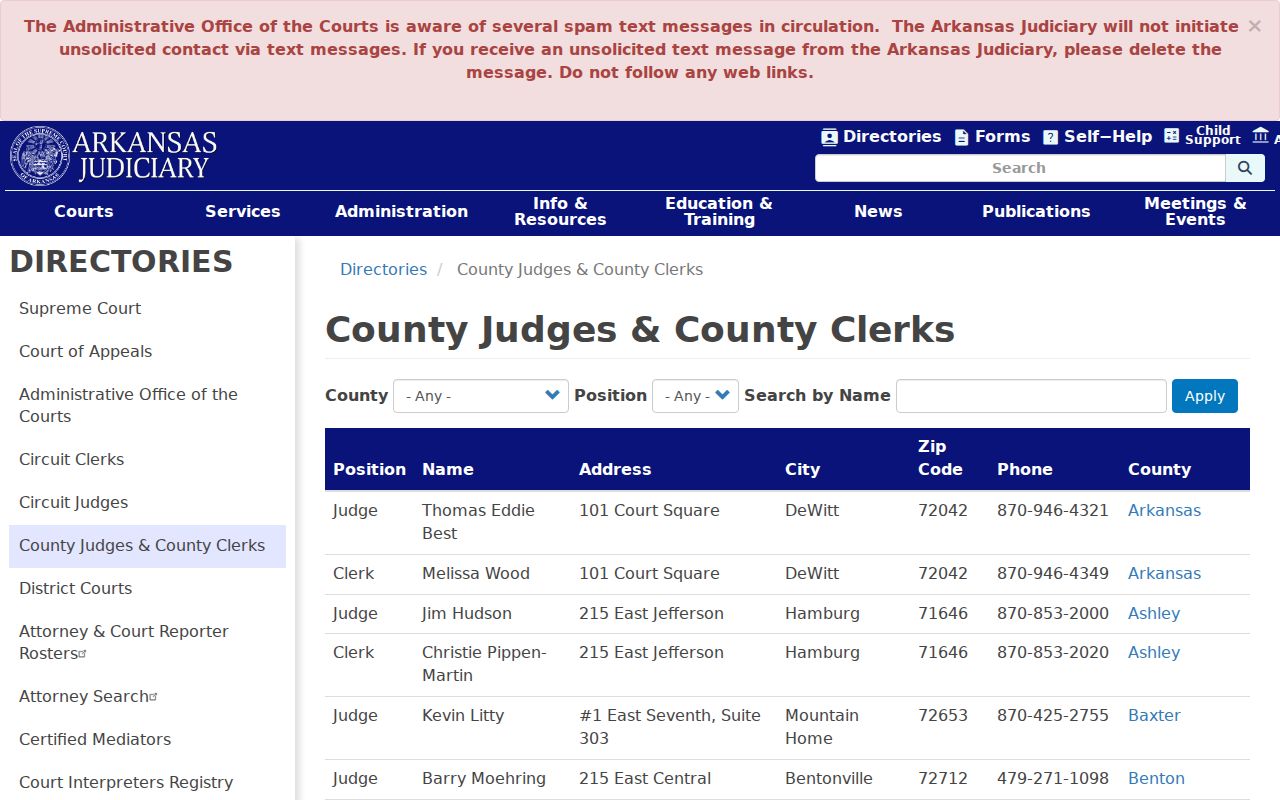
That listing backs the local clerk route. A District Court small-claims request still goes to the department clerk who holds that file. The Arkansas legislative history page traces the state open-records provision that works alongside court-specific access rules.
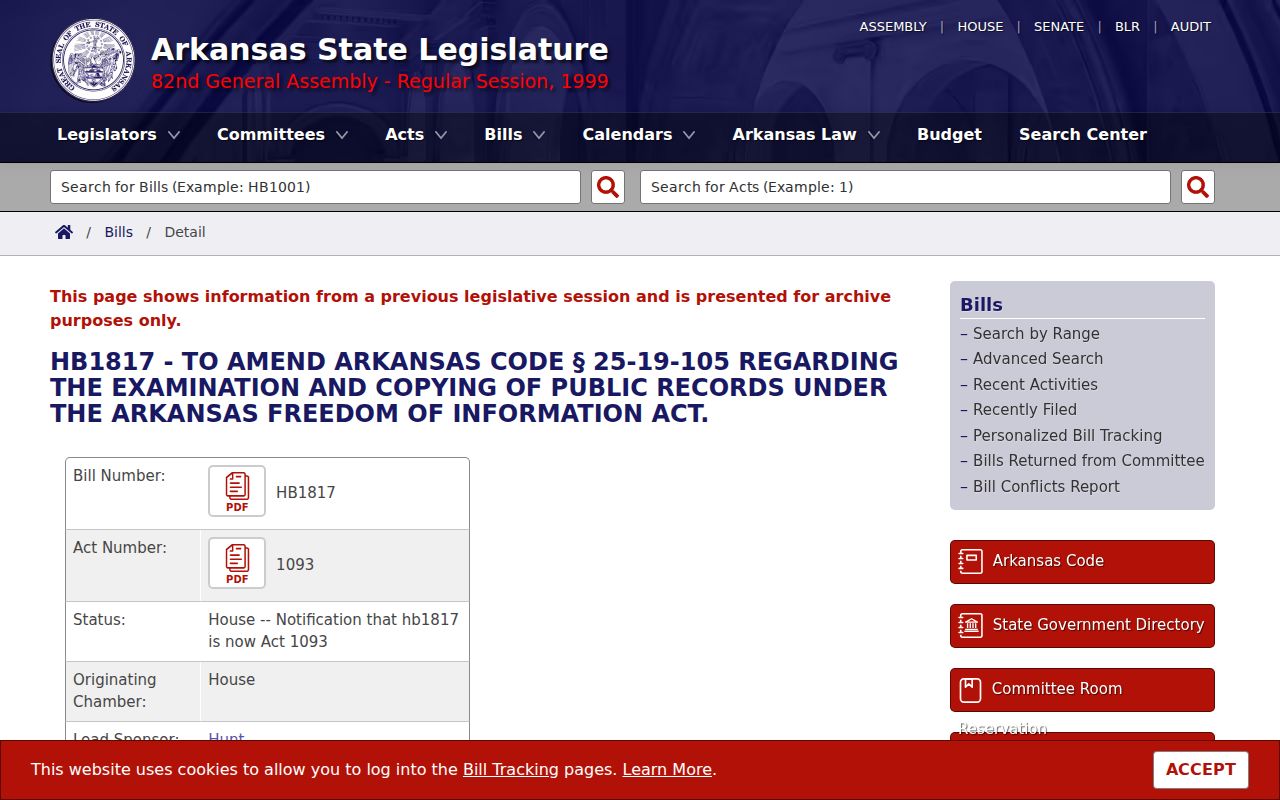
That provision matters for copy access; Administrative Order 19 still governs court records.