
Getting Prairie County Court Records
Start with Search ARCourts, the Arkansas Judiciary Case Search. Use it to pinpoint the case and the event you need. Record the court, district, case number, caption, document title, and filing date. A public image link sometimes appears. Follow it when it does. If the image is missing, call the custodian. Circuit Court requests go to the Prairie County Circuit Clerk in the northern or southern district. Traffic, misdemeanor, environmental, limited civil, and small-claims files belong to the District Court clerk that heard the case.
The county publishes no copy-request form, email channel, drop box, or counter hours. That gap makes the phone part of the process. Ask whether you can inspect the file. Ask whether it sits on site, what copy or certification charge applies, what payment the clerk takes, how long retrieval takes, and whether you need an appointment. Do not mail a request until the district, street address, delivery method, and payment instructions are confirmed.
- Find the exact Prairie County case and event through the statewide public search.
- Decide whether the need is for the docket, a named filing, the whole file, or a transcript.
- Call the correct Circuit or District clerk and confirm custody, access, fees, payment, and timing.
- Request in-person inspection, a mailed copy, or the available electronic delivery route.
- State whether the copy must be plain, certified, or otherwise authenticated.
- Check the delivered record against the requested case number, title, and date.
Prairie County's Two Record Districts
Prairie County splits its courthouses into two districts. The northern Circuit Clerk counter sits at 200 Courthouse Square, Suite 104, Des Arc, AR 72040. Its phone number is 870-256-4434. The southern Circuit Clerk answers at 870-998-2314, with fax 870-998-2010. Current county material lists 123 Magnolia Street in DeValls Bluff. Other government pages use 183 Prairie Street for offices in that complex. Confirm the address before mailing anything.
The official Arkansas Circuit Clerk directory places Prairie County in the statewide clerk network.
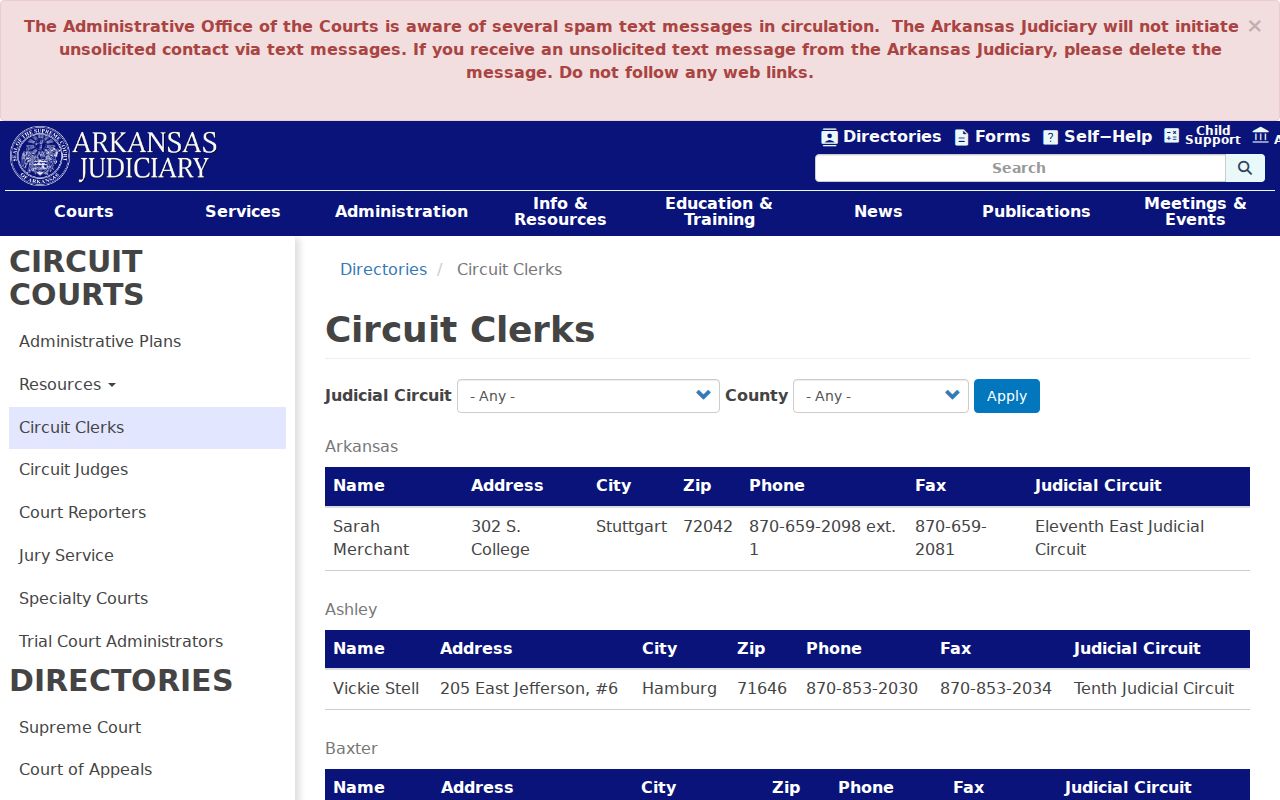
The directory helps you reach the right clerk. Which district you need still depends on where the Prairie County case file is held.
Prairie County Circuit Clerk
Northern district: 200 Courthouse Square, Suite 104, Des Arc, AR 72040
870-256-4434
Southern district: Confirm the DeValls Bluff mailing address before sending a request.
870-998-2314
Court Record Types
A court record can mean several things. The docket is the chronological index. A filed document is the complaint, motion, order, or judgment tied to an event, while a certified copy is a clerk-attested reproduction for uses that demand official proof. These layers are not interchangeable.
- Docket or case history showing dated case activity
- Complaint, petition, information, indictment, or answer
- Motion, notice, court order, disposition, or judgment
- Public exhibit or other filing when access is allowed
- Plain, certified, exemplified, or authenticated copy when offered
- Transcript ordered through the court reporter rather than rebuilt from docket events
Transcripts need special care. A Prairie County docket shows that a hearing happened. It does not show what was said there, because it does not reproduce spoken testimony. Ask the trial court for the court reporter's contact and an estimate. Exhibits, sealed portions, juvenile material, and protected domestic content may need added authority. Some of it may stay closed entirely.
Prairie County eFlex Record Limits
Arkansas eFlex is the electronic filing system. It is not the ordinary public court record search. Registered filers can view case history for matters in which they filed. Parties of record can get broader remote document access. Guidance from the state is blunt. The eFlex Search Cases function does not reach the clerk's case-management system, so a filer login is not a public Prairie County document portal.
The eFlex filer resources page marks the role-based entry point.
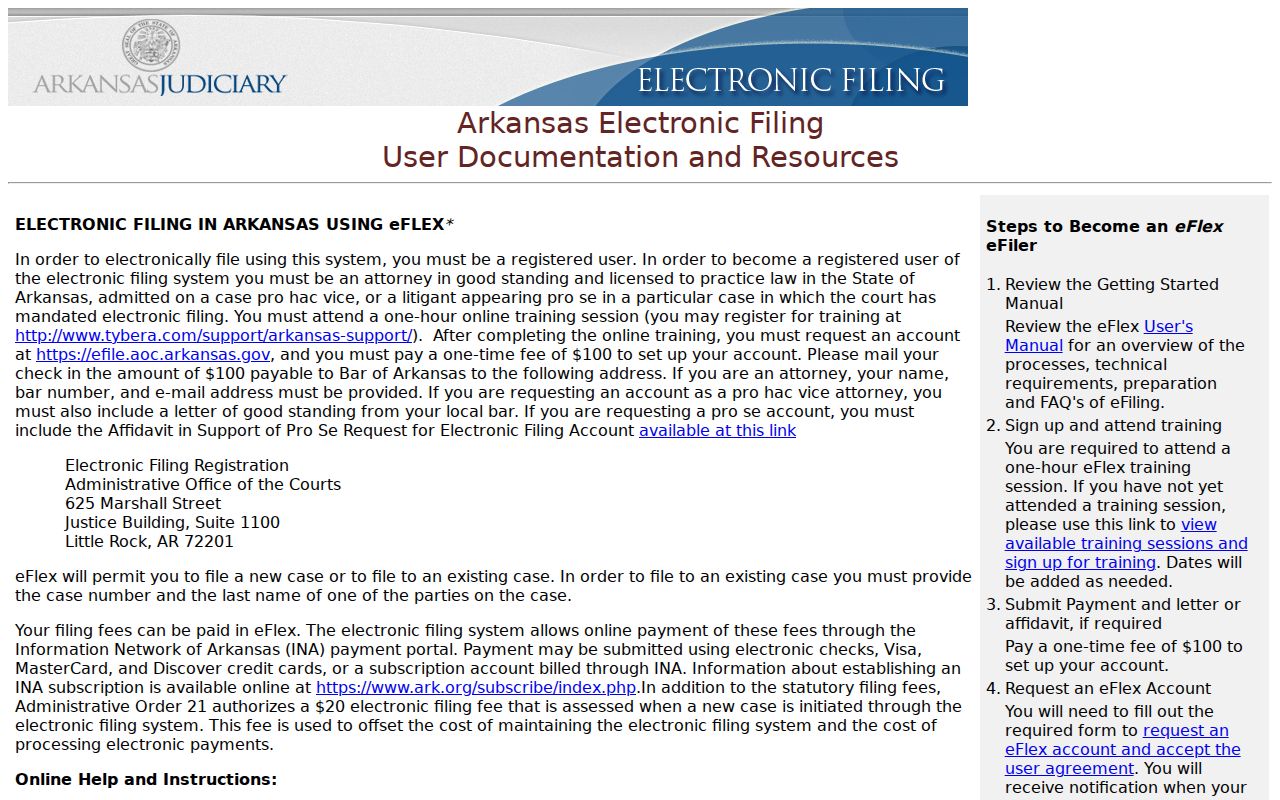
The tools there support filing and authorized case access. Public users go elsewhere. Search ARCourts and the Prairie County clerk remain the public discovery and certification routes, while clerks and CourtReview users have a separate official eFlex resource area.
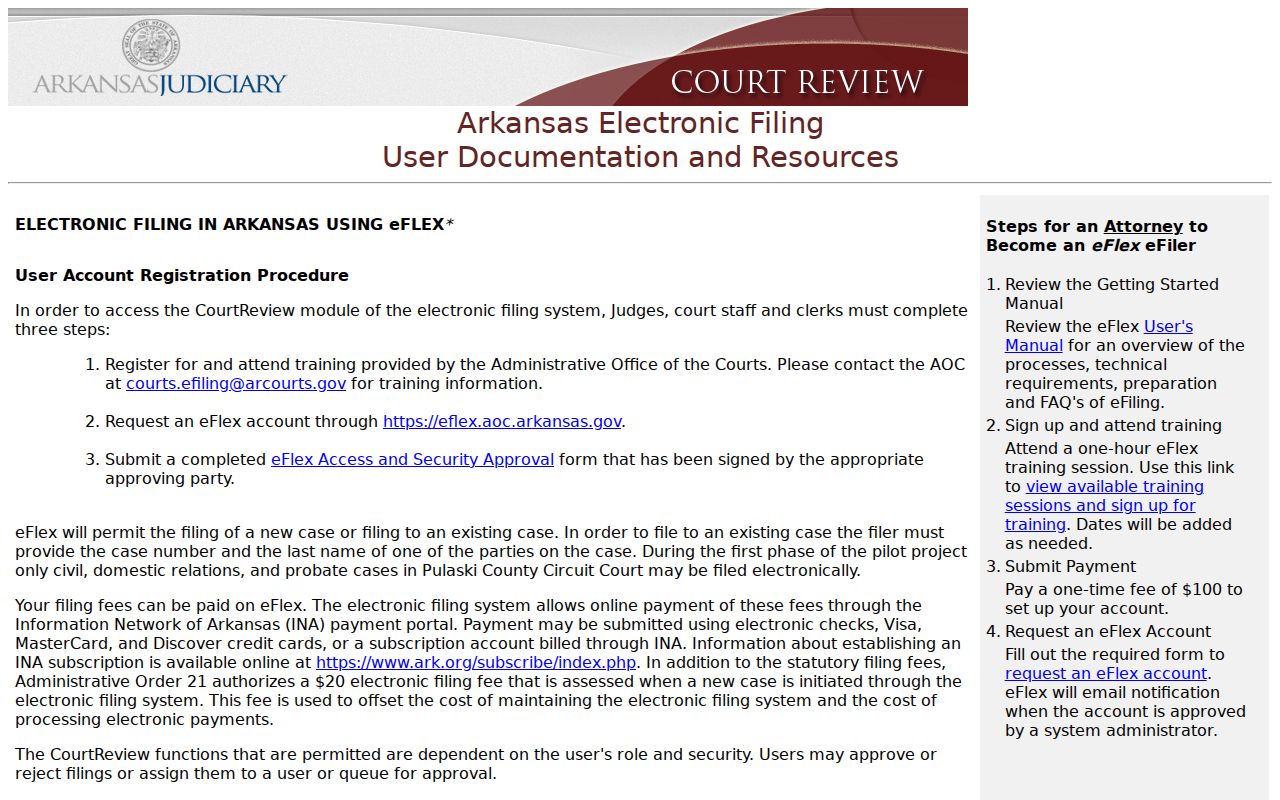
That page serves a different audience. User role, filing authority, public discovery, and record custody are separate parts of the Arkansas court system.
Inside a Prairie County Court Record
A Prairie County case file starts with identifying data. Documents and events collect behind it as the case moves along. Fields vary by case type and access level. Public case information may show parties, attorneys, charges, settings, dispositions, and financial data. The clerk's file holds the actual papers. A public event line is only an index description, so order the named filing when its terms matter.
| Case Number and Caption | The unique identifier and names or roles in the title |
|---|---|
| Court and District | The Prairie County custodian and local filing location |
| Type, Filed Date, Status | The case category, start date, and recorded state |
| Parties and Attorneys | Participant names, roles, and counsel where public |
| Events and Filings | The chronological docket/case history |
| Settings and Disposition | Hearing entries, resets, judgment, plea, or other outcome |
| Document Access | A public image link, restriction marker, or clerk-only route |
For a civil judgment, name the exact judgment entry. Never grab any paper near the closing date. In a criminal matter, keep charge, plea, disposition, and sentence separate. Check the newest hearing setting for a later reset. The Prairie County Case Lookup walks through the field-by-field search that comes before a document request.
Prairie County Record Request Details
Prairie County does not require one exact request form. A plain, complete letter does the work. Give the clerk your name and contact details. Include the full case number and caption, the court and district, and the document title with its filing date. Say whether you want the whole file or only certain pages. Note whether the copies should be plain, certified, or exemplified. Add your preferred delivery method, a cost limit, your deadline, and how you plan to pay.
Old Prairie County material can sit in bound docket books, on microfilm, or at an off-site storage facility. Ask the clerk whether the item is on site. Ask how retrieval affects timing. An online index or an eFlex account proves nothing about whether an old docket book was ever digitized. For pre-digital files, confirmation from the clerk is the only honest answer.
The official eFlex terms of use lay out the account conditions. They also cover security, eligibility, and access rules for the system.
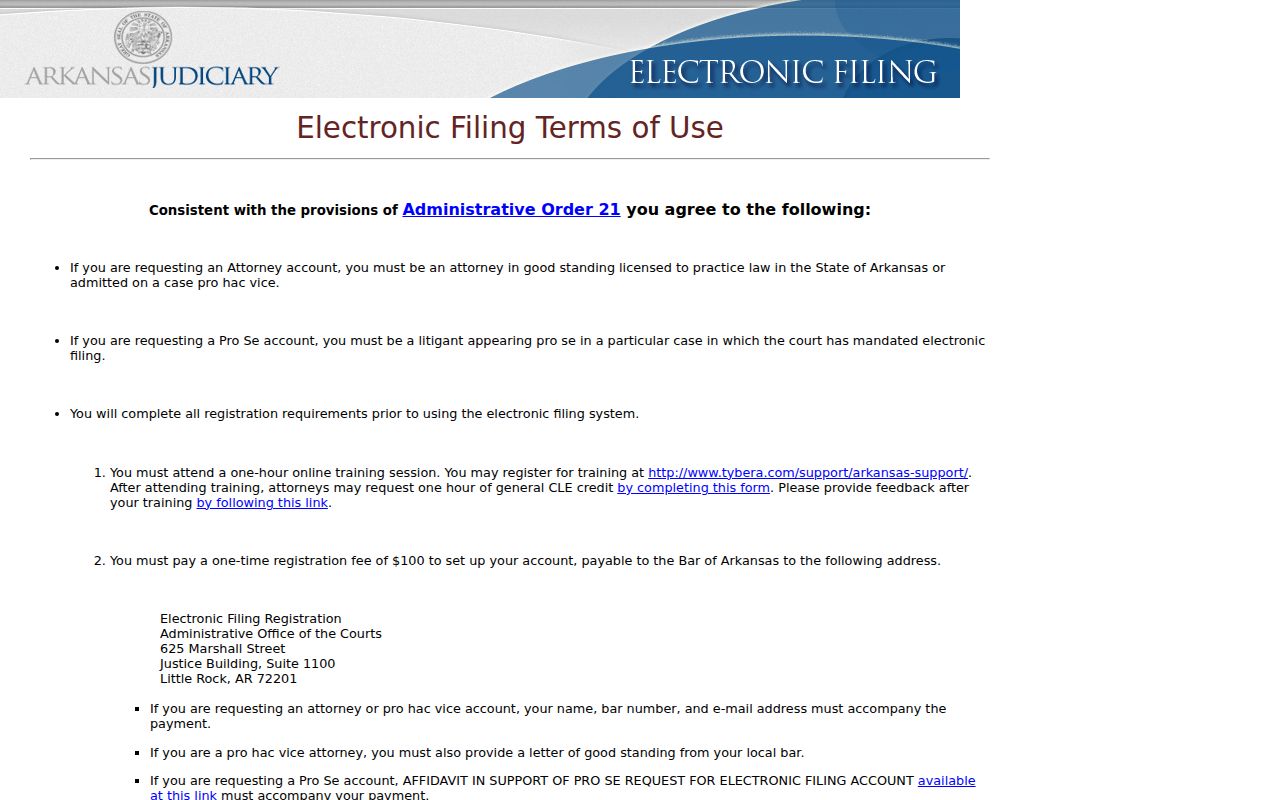
Those terms apply to electronic filing users. For the paper case file itself, the Prairie County clerk issues separate inspection and copy instructions.
Fees and Certified Copies
Prairie County publishes no official fee sheet on the web. Borrowing another Arkansas county's rate is a mistake. Before ordering, confirm the page count, the form of copy, whether certification is needed, the accepted payment type, any delivery charge, and any search or retrieval cost with the correct district clerk. Remember that a certified copy is not the same as a printout of free public case information.
| Item | Verified Amount or Status |
|---|---|
| Search ARCourts case information | Free public search |
| Prairie plain paper or electronic copy | Not located; confirm with the correct district clerk |
| Certified copy | Not located; confirm pages and certification charge |
| Exemplified or authenticated copy | Availability and fee not located |
| Clerk record search | Fee not located |
| eFlex one-time registration | $100 on the current Judiciary registration page |
| eFlex new-case electronic filing | $20 plus statutory filing fees |
| eFlex pro hac vice | $200 per case plus $100 registration, where applicable |
The statewide eFlex payment policy documents electronic filing charges.
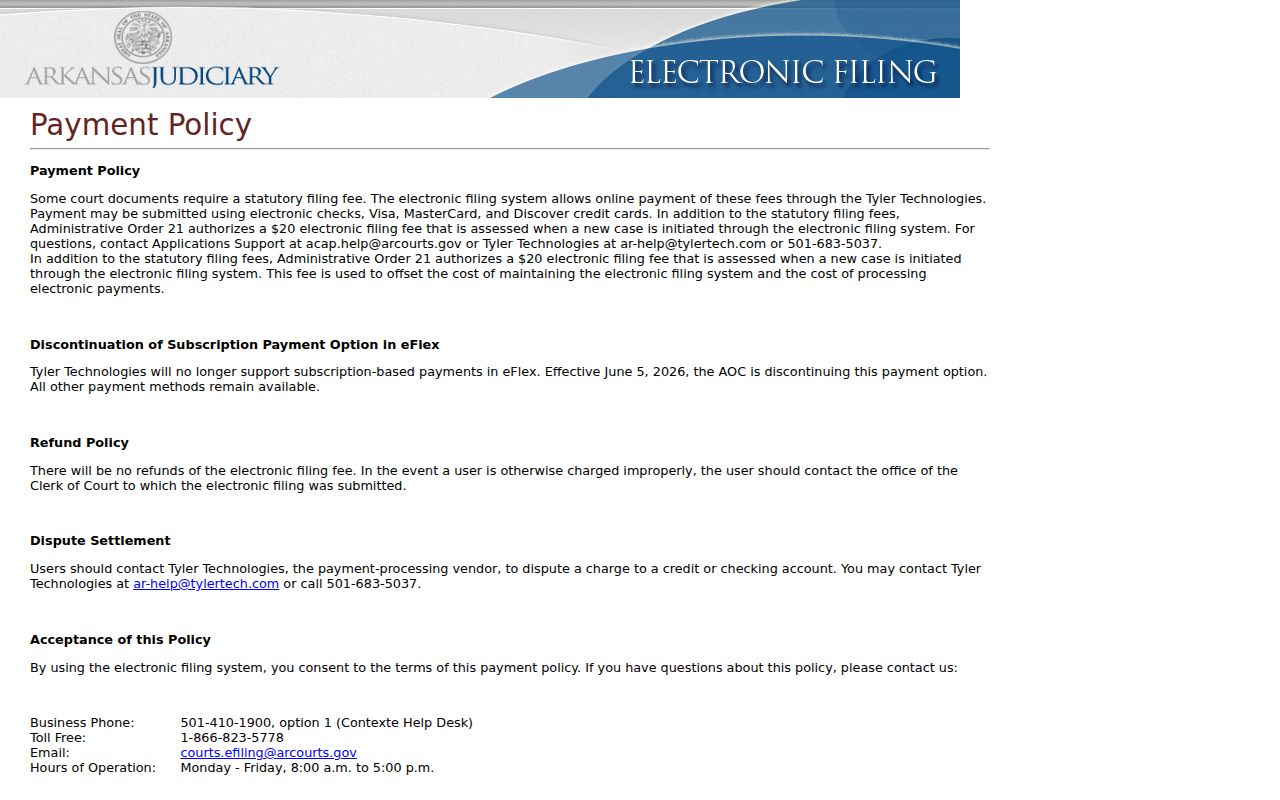
Statewide filing charges say nothing about Prairie County's plain-copy, certification, transcript, or local record-search fees.
Compiled Prairie County Court Data
The Arkansas Administrative Office of the Courts runs a compiled-information process for state-system data. That route is not for pulling one Prairie County complaint, order, or judgment. The form asks who you are and how to reach you. It also asks for a detailed description of what you need. Finally, it asks whether identifying individuals is essential. A one-case request belongs with the local custodian holding the file.
The Judiciary's court information request page keeps the compiled and bulk routes separate.
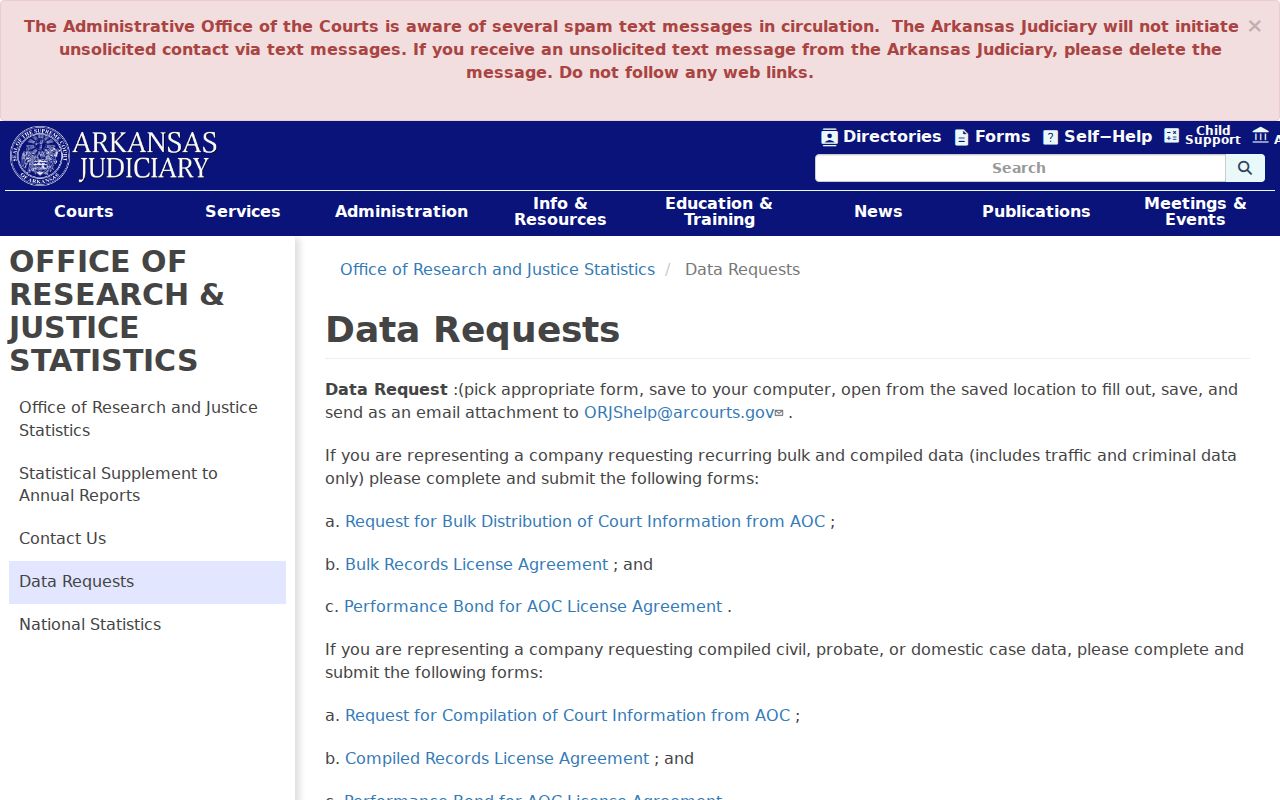
That separation is deliberate. It stops a broad data channel from working as a shortcut around the Prairie County clerk or a court access restriction. The official compiled-information form displays its detailed input fields and submission controls.
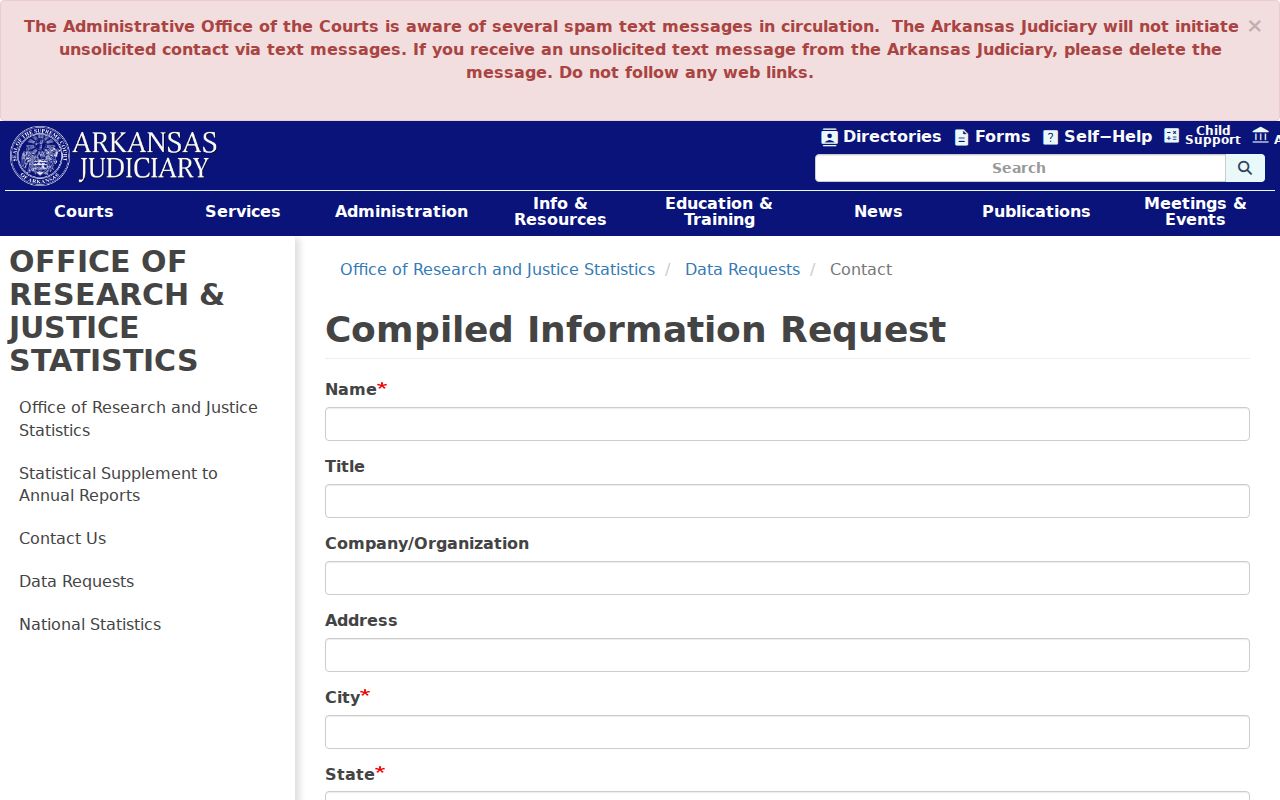
The AOC bulk-distribution route lists a $1,200 setup and first-month amount. Bulk service is not a single-record copy channel.
Sealed Records and Public Access
Arkansas Supreme Court Administrative Order 19 governs access to court records. It bars Social Security numbers. It also bars anything made confidential by federal law, Arkansas law, court rule, or court order. Juvenile matters, adoption files, protected domestic content, and sealed exhibits may be missing or masked. Similar restricted material may be hidden too. Online access can be narrower than in-person inspection. Still, the clerk cannot release what the law or an order protects.
Arkansas access rules: Administrative Order 19 controls court-record access and confidentiality. Arkansas FOIA, Ark. Code §25-19-105, addresses examination and copying, while judicial rules particularly govern case records.
An expected record fails to appear. Check the case number, the spelling, the court level, and the Prairie County district. Ask whether the file is simply non-digitized or actually restricted, since the answer changes what you can do next. Staff can walk you through the process without revealing confidential content. A party or authorized person may need identification, counsel, or a court order. No request method gets around redaction or sealing.
Note: Public docket access does not open every filing image. Nor does it expose private data fields to remote viewing.
From Prairie Docket to Copy
Three stages make the shortest dependable route. First locate the Prairie County docket and case history, then pinpoint the exact event, then ask the proper custodian for the filed document. Write down the document title and date before calling. Tell the clerk whether a plain copy will do or certification is required. A transcript means asking for the reporter; a sealed exhibit means asking only about the lawful access process.
Each system plays its own role in this workflow. Search ARCourts handles public discovery. Arkansas eFlex handles filing and role-based access. The Prairie County Circuit Clerk and District Court clerks keep the authoritative local files, while the AOC compiled-information process serves a different data need. Keeping those channels separate cuts delay and keeps a free index line from being mistaken for the whole court record.