
Searching Prairie County Criminal Dockets
Search ARCourts is free. It is also known as Arkansas Judiciary Case Search, and it is the natural first stop for public criminal case information. The case number is your strongest key. A participant name can work too, though Prairie County has two Circuit Court districts plus several District Court departments, so a bare name may pull the wrong record or nothing at all.
When the portal falls short, work down the chain. Try the legacy Public CourtConnect. Then call the right clerk, ask about counter inspection, and request copy or mailing instructions. The court offers no local email request form, public terminal, or posted copy-fee sheet.
- Decide whether the charge is a felony in Circuit Court or a misdemeanor in District Court.
- Select Prairie County and the court or department shown on the case papers.
- Search the exact case number first, then try the participant name or case description.
- Match the court, caption, filing date, status, and case number before reading the history.
- Read each event in date order and find the newest setting, plea, and disposition.
- Ask the custodian for any unavailable filing or certified copy.
Prairie County Criminal Search Fields
On the search form, participant data sits apart from case data. The caption may read "State of Arkansas" because the state prosecutes the charge. That is not the accused person. Organization or Case Description fields can help with a state-captioned matter. But the exact case number gives the cleanest result.
| Search field | Best use | Caution |
|---|---|---|
| Case number | Exact Prairie County criminal file | The local number mask was not published |
| First, middle, last name | Participant search | Confirm identity from case details |
| Organization or description | Caption or descriptive text | Results depend on entered data |
| County and court | Prairie Circuit or District routing | Select the correct department when offered |
| Date, status, charge | Narrowing a result set | Availability can change with the interface |
The interface does not visibly mark every field as required, so begin narrow and broaden spelling or date filters with care. Arkansas eFlex plays a different role entirely. It serves eligible registered users who file documents, and its case search covers only matters that filer has touched. It cannot reach the clerk's full case-management system. For everyday public searching, use Search ARCourts. For an authoritative filing or certified copy, go to the clerk.
Inside a Prairie County Criminal Docket
Think of the docket as a chronological index. For a Prairie County criminal case it can list the court, status, parties, attorneys, charges, events, settings, bond, plea, disposition, financial entries, and appeal links. A public document link may appear. Even so, a single event line does not carry the full text of the filed order.
| Case number | The court-assigned identifier; no Prairie format should be guessed, so preserve it exactly as shown. |
|---|---|
| Charge and count | The alleged offense, statute, level, and count when those fields are entered. |
| Setting | Event type, date, time, department, and sometimes appearance mode. |
| Bond and plea | Release terms and the formal response to a charge, where public. |
| Disposition | The recorded outcome for each count, distinct from the sentence and overall case status. |
| Document link | A filing image only when remote public access is allowed. |
Read each count separately. One charge may be dismissed while another ends in conviction, acquittal, or another lawful disposition.
Prairie County Criminal Outcome Terms
Arkansas sources publish no Prairie County abbreviation list. Your safest route is to read the full words and ask the clerk about any local code. These terms mark different points in a case, so treat them as distinct.
- Nolle prosequi
- The prosecution formally chooses not to proceed on a charge at that time.
- Dismissed
- The court record shows that a charge or case ended without a conviction under the stated disposition.
- Acquitted
- The fact finder returned a not-guilty result.
- Convicted
- The case records a conviction after a plea or verdict.
- Bond forfeiture
- The docket records action tied to a failure to meet bond or appearance conditions.
A charge is an allegation, never an outcome. A plea entry, a sentence, and a case status can be separate events with their own dates. Does the disposition text confuse you? Write down the event date and count number before you contact the clerk. That gives Prairie County court staff a precise entry to pull, without asking them to interpret the result for a party.
How a Criminal Case Moves
A Prairie County criminal case can open with a complaint, information, or indictment. First appearance and bond entries may come next. Arraignment addresses the charges and the plea, while later pretrial settings track case management, motions, or readiness. From there the matter may close in several ways. It could end through a negotiated plea, bench trial, jury trial, dismissal, or another disposition.
Prairie County docket flow: Charge Filed › First Appearance › Bond › Arraignment › Pretrial › Plea or Trial › Disposition › Sentencing › Appeal or Post-Judgment Events
Not every case hits every stage. Trust the actual case events in the docket. A filed motion is not itself a hearing, and a setting can move before the case resolves.
Prairie County Criminal Docket Resets
The official Hazen court notice uses "Plea and Arraignment (Traffic and Criminal)" and "Bench Trial" as real local setting labels, and it records resets while directing parties to call for new dates. That language shows why each Prairie County criminal docket setting needs to be read by type, department, and sequence. A reset moves a date. It does not dismiss a case. Nor does it decide a charge. So search forward from the old date for a continuance, reset, cancellation, or later order, then confirm the newest setting with the named court. An old notice, no matter how official, is not proof of a current hearing date.
First appearances deserve the same caution. Prairie County's administrative plan noted they could be handled by video conference, yet that historical procedure does not fix the appearance mode for a current case. Follow the live notice and the court's instructions. Note: Treat the newest Prairie County setting as provisional until the specific court confirms it still sits on the live schedule.
Courts That Hold Criminal Dockets
Felony charges in Prairie County belong to Circuit Court. It sits in Arkansas's Seventeenth Judicial Circuit. The Prairie County Circuit Clerk maintains those felony filings, with counter service split between a northern and a southern district point. Misdemeanors and traffic cases take a different road. Those, plus many first appearances, usually land in Prairie County District Court.
Court levels matter for a docket search. The Arkansas court structure page places Circuit Court above State District Court for trial jurisdiction. Appeals then travel through Circuit Court, the Arkansas Court of Appeals, or the Arkansas Supreme Court, as the law provides. A District Court appeal can start a new Circuit Court case number. It cross-references rather than continuing as one unbroken docket.
For judge names, the official Circuit judge directory lists the current Prairie County assignments in the Seventeenth Circuit.
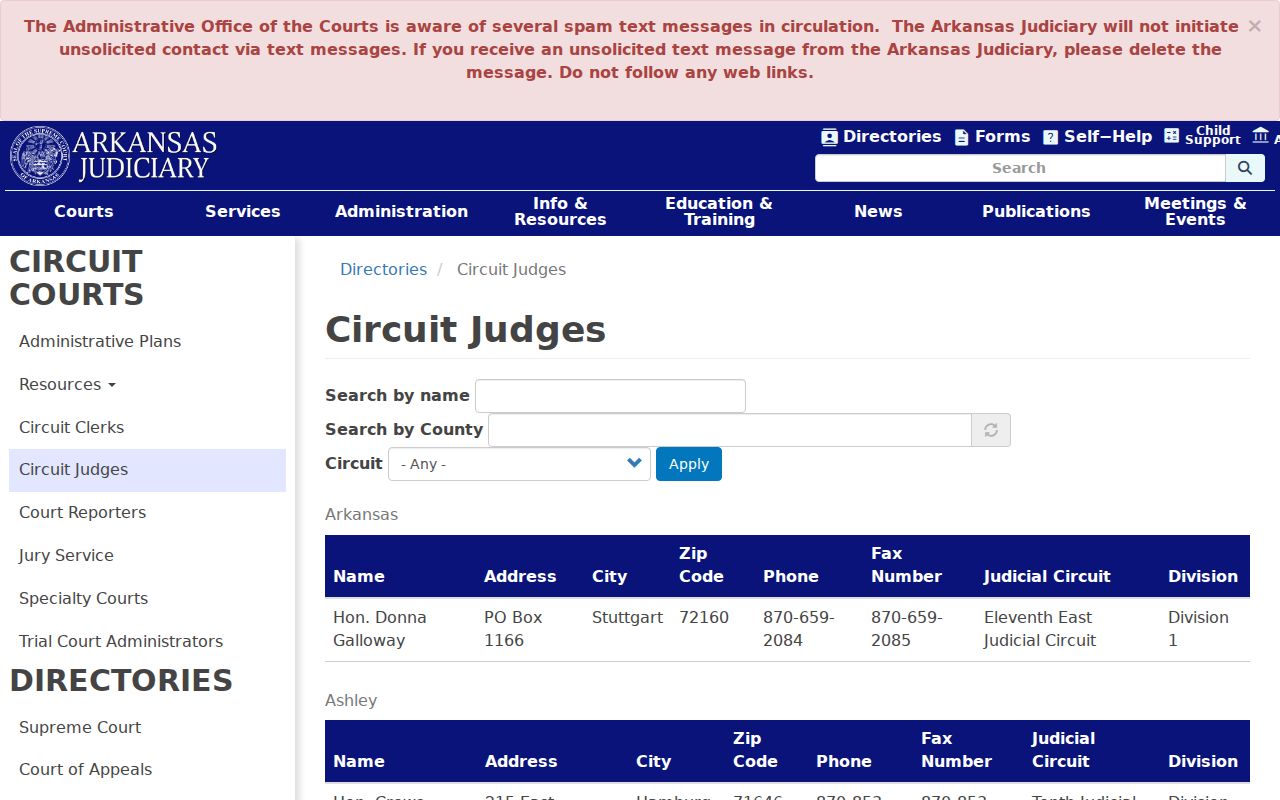
The directory is the sound source for current assignments because court divisions can change.
Prairie County Felony Docket Routes
Prairie County felony files split by district. A paper docket may sit at the Des Arc office in the north or the DeValls Bluff office in the south. Call 870-256-4434 for the Des Arc Circuit Clerk counter. The southern number is 870-998-2314. Give the case number and ask which district holds the file before mailing anything.
District Court holds its own criminal files. Hazen lists 870-255-4513 and 870-255-4514. The Des Arc District Court judge listing shows 501-305-3878. Ask the practical questions by phone. Find out whether counter inspection is allowed, whether the file is on site, what copy and certification charges apply, which payments are accepted, and whether a copy can be mailed. Prairie County posts none of these local terms online.
Sealed Dockets and Public Access
Confidentiality law, court rules, and sealing orders all limit public access to Prairie County criminal case information. A missing name match can mean a sealed record, a restricted one, a file never digitized, or one indexed in another court or in the other Prairie County district. Juvenile material stays closed. So do protected personal identifiers.
Arkansas access rules:
Arkansas Supreme Court Administrative Order 19 governs court-record access and excludes confidential data.
Arkansas Code Title 16, Chapter 90, Subchapter 14 provides the state process for sealing eligible criminal records.
Arkansas FOIA, Ark. Code §25-19-105 addresses examination and copying, while judicial rules govern court case access in particular.
The clerk will explain the request process. Protected content stays protected, and no clerk can hand out legal advice. A compiled-data request cannot get around a court restriction.
A no-match search result is not proof of anything. Confirm the exact case number, the court level, the geographic district, and the spelling before assuming a restriction. Then ask the clerk's office whether the Prairie County record is older, undigitized, filed under another caption, or unavailable under law or court order.
Prairie County Criminal Appeals
Appeal entries call for a second look. Read them at a different court level. That split trips up many docket readers. A District Court appeal usually moves up to Circuit Court and often carries a distinct case number. A Circuit Court appeal enters Arkansas's appellate structure, so the trial docket may show only a notice or cross-reference while the reviewing court builds its own appellate record.
The Arkansas appellate clerk page publishes the official forms and court information for the Arkansas Court of Appeals and the Arkansas Supreme Court.
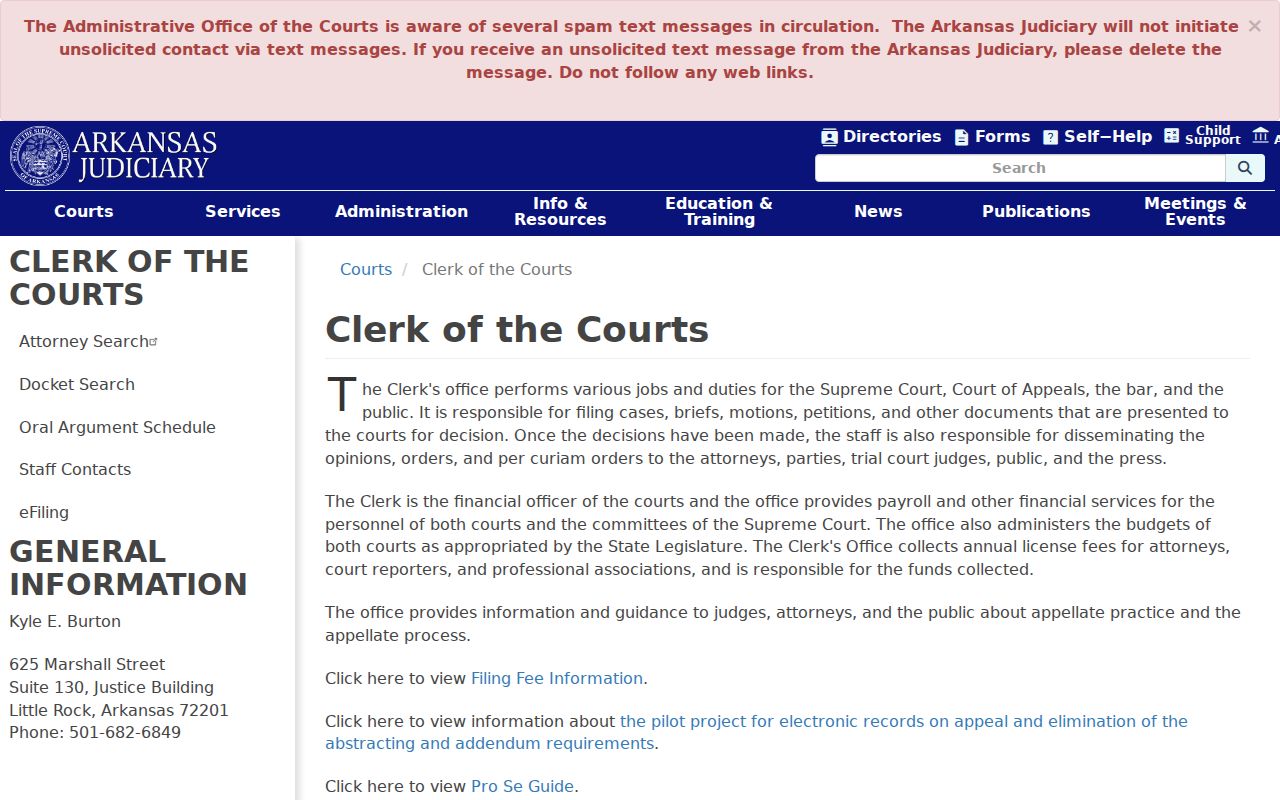
This source separates a Prairie County trial docket from a later appeal file.